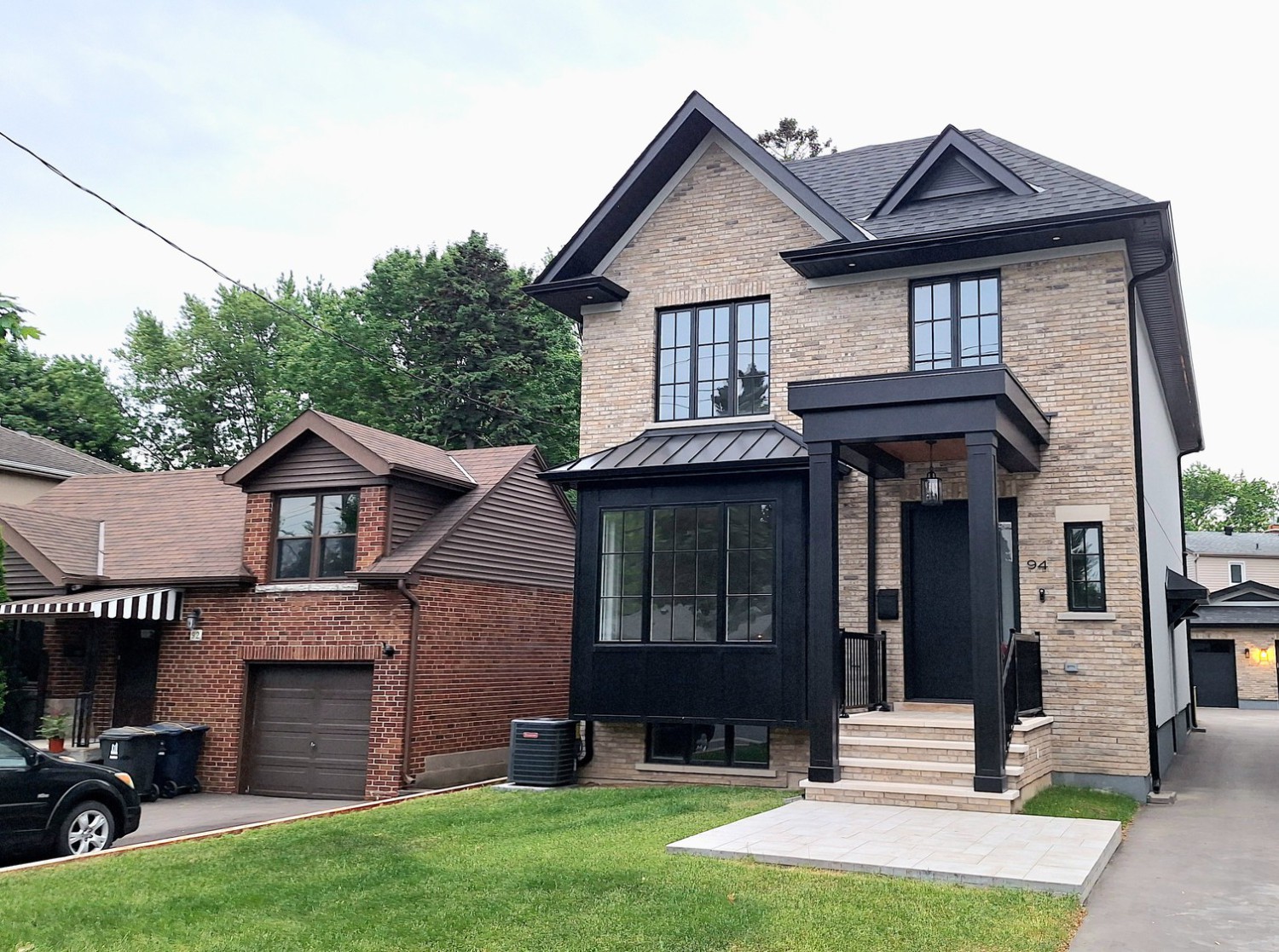
When shopping for a home, it can be easy to fall in love with the best house in the area: the one with the most square footage, the most contemporary design, the dream kitchen, and top-quality material upgrades.
But from a purely real estate perspective, the house that makes the strongest first impression doesn’t always represent the most profitable long-term investment.
In many cases, buying a slightly less impressive property in a sought-after neighbourhood can prove a much more advantageous strategy.
The Neighbourhood Also Determines a Property’s Value
There’s a common saying in real estate: location, location, location!
An average-looking house in an in-demand area may increase more in value overtime than an exceptional property in a less popular neighbourhood. Why? Because a homeowner can improve their residence bit by bit, year by year, but they can’t change its surroundings.
Proximity to services, schools, public transport, shops, green spaces, and major development projects significantly strengthens a locality’s appeal.
A less-than-perfect property in a booming area might, therefore, offer excellent appreciation prospects
The Ugly Duckling: An Opportunity That Shouldn’t Be Overlooked?
Buying a house that needs some TLC could prove a wise strategy. A property with a run-down yard and outdated rooms can actually represent an opportunity to enhance its value.
A buyer with the necessary time and budget can transform their home gradually and boost its market appeal.
A few improvements can make a big difference:
- Modernize certain kitchen components.
- Improve the lighting.
- Revamp the landscaping.
- Optimize storage.
- Replace certain antiquated finishes.
Still, you should exercise caution: a house that costs less because it requires major renovations (foundation, roof, structural problems, water infiltration) isn’t always a bargain.
A pre-purchase inspection remains essential for distinguishing a diamond in the rough from what could turn out to be a money pit.
The “Beautiful House” Trap
Conversely, acquiring the biggest and nicest house in the neighbourhood also carries certain risks. A property that stands out significantly from the others can stop appreciating in value.
For example, in a location where the surrounding houses sell for around $600,000, a property recently renovated with luxury materials on the market for $900,000 might not grow in value very much further in the future. Prospective buyers will always contrast this house with other properties in the area.
This principle is usually termed the “neighbourhood price ceiling”: homeowners can over-renovate their residence compared to the area standard.
Striking the Right Balance
The best strategy tends to lie somewhere between the two extremes: a property with good fundamentals, in an attractive neighbourhood, but that still offers improvement opportunities.
Before submitting an offer, it’s a good idea to ask yourself a few questions:
- Is the neighbourhood desirable and set to grow?
- Is the house well maintained?
- Can I realistically undertake the proposed renovations given my budget?
- Has the property already reached its maximum value for this area?
- Could this house appeal to future buyers?
When it comes to real estate, falling in love with the property you’re considering purchasing is important. It just shouldn’t be the only deciding factor. A currently less-than-ideal house could turn out as an excellent choice down the line if it’s in the right location and offers significant appreciation potential.
This doesn’t mean you should never buy an exceptionally nice house. If it perfectly meets your needs, and you plan to stay there for a long time, the joy of living there can outweigh the cost.
After all, a house isn’t just an investment: it’s also your home!